Mapping Wagering Conditions to Enhance Multi-Tiered Reward Acquisition in Digital Casinos
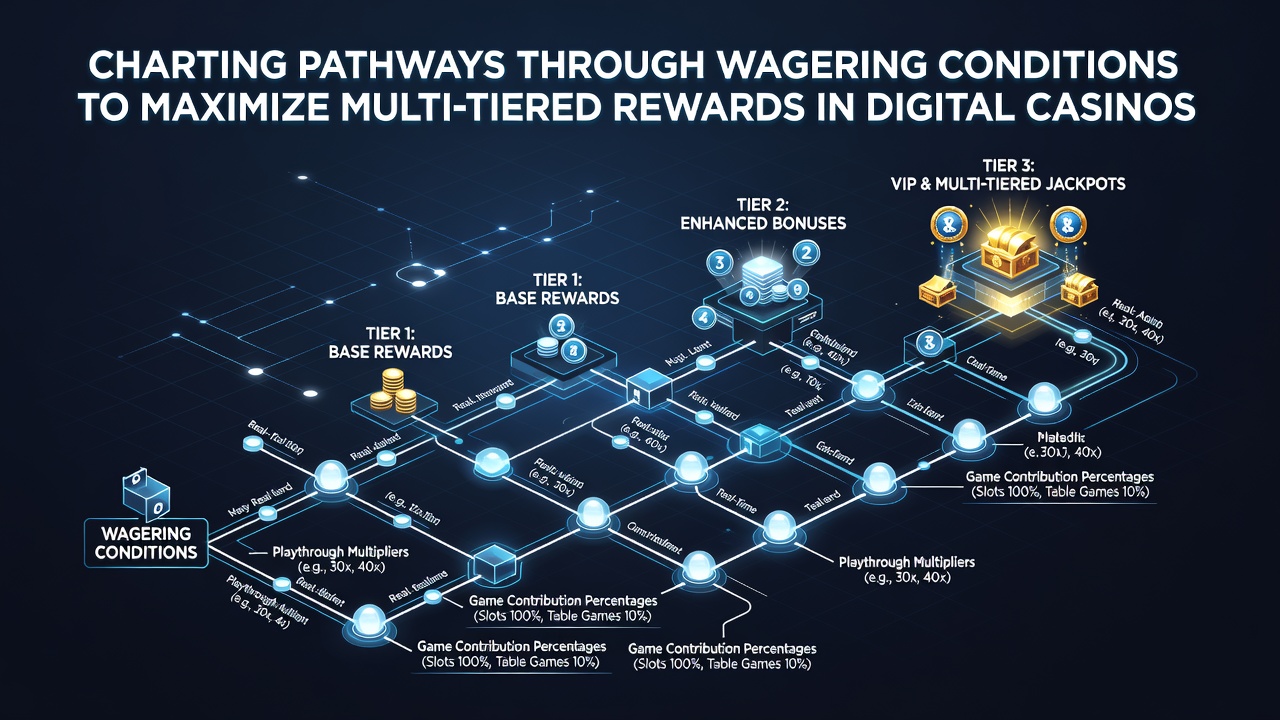
Digital casino operators structure bonuses around specific wagering conditions that determine how players progress through multiple reward tiers, and these frameworks rely on defined playthrough multiples applied to deposit amounts plus bonus funds. Research from the University of Nevada, Reno's gaming studies program shows that operators calculate requirements using formulas where a 30x multiple on a $100 deposit plus $100 bonus creates a $6,000 total wager target before withdrawal eligibility opens. Players advance across tiers when they meet incremental thresholds, such as completing initial playthrough to unlock reload bonuses or loyalty points that convert into cashback at higher percentages.
Core Components of Wagering Frameworks
Each bonus tier incorporates distinct elements including contribution percentages from different game types, time limits for completion, and maximum bet caps during the active period. Slots typically contribute 100 percent toward requirements while table games like blackjack contribute only 10 to 20 percent, a distinction that shapes player choices across platforms. Data from the American Gaming Association indicates that 68 percent of bonus activations in 2025 occurred on slot titles because of these higher contribution rates, which shorten the path to tier advancement. Operators enforce separate caps on individual bets, often limiting wagers to $5 or $10 per spin until requirements clear, and violations reset progress or void rewards entirely.
Time-bound windows add another layer, with most conditions requiring fulfillment within 30 days although some loyalty programs extend this to 90 days for higher tiers. August 2026 marks the scheduled rollout of updated transparency standards in several North American jurisdictions that will require operators to display real-time progress trackers for all active wagering conditions, a change expected to reduce player disputes according to reports from state regulatory bodies.
Progression Across Multiple Reward Levels
Multi-tiered systems connect initial welcome packages to ongoing loyalty ladders where completed wagering on one level automatically feeds points into the next tier. A player who clears a 40x requirement on a first deposit bonus earns entry into a silver loyalty band that offers reduced multiples on subsequent offers, sometimes dropping from 40x to 25x. These connections create pathways where early completion accelerates access to cashback rates that rise from 5 percent at entry level to 15 percent at platinum status. Observers note that operators adjust these linkages seasonally, with summer promotions frequently lowering thresholds by 10 to 15 percent to maintain engagement during slower months.
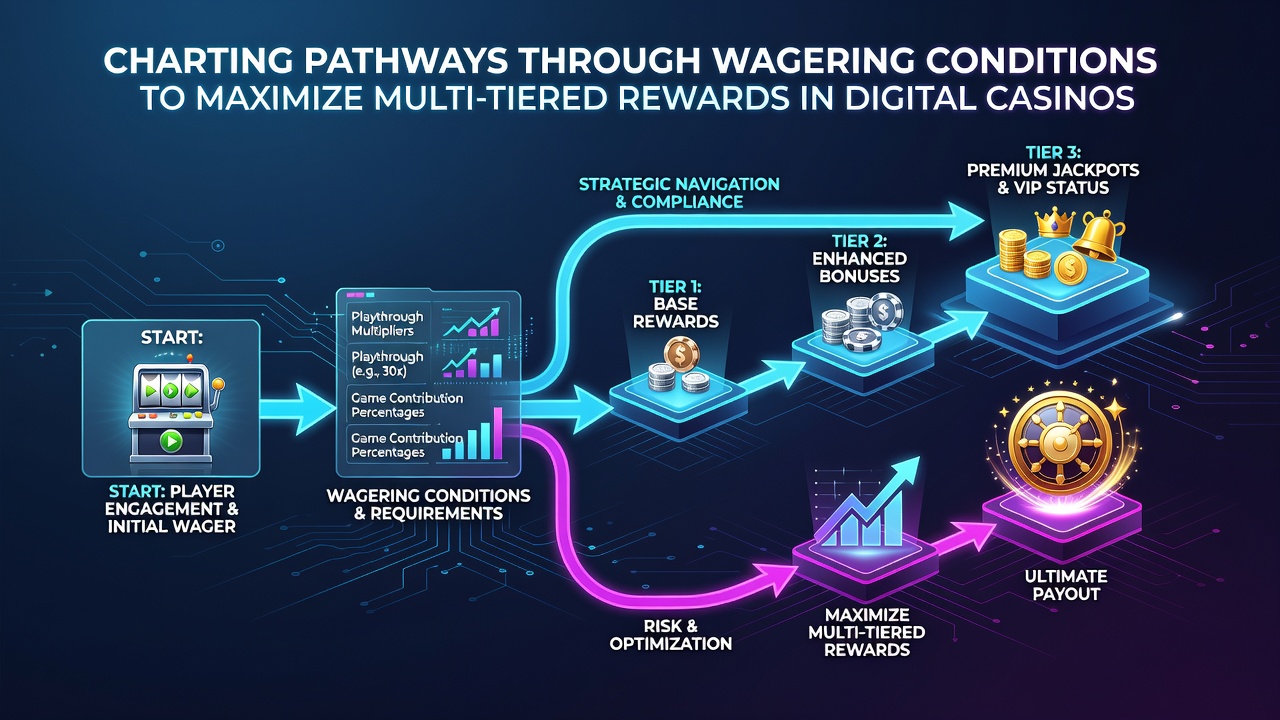
Game weighting and exclusion lists further define viable routes because certain high-volatility titles receive full contribution credit while others receive none. Progressive jackpot slots often fall into partial contribution categories, forcing players to balance volume play on standard slots against the appeal of jackpot chases. Industry reports from the European Gaming and Betting Association highlight that operators introduced dynamic weighting adjustments in early 2025, allowing select games to shift contribution percentages mid-promotion based on player volume metrics.
Practical Application of Tier Navigation
Players track cumulative progress through account dashboards that log completed wagers against remaining targets, and successful navigation requires prioritizing games with optimal contribution rates while respecting bet limits. One documented case involved a player completing a bronze-to-silver tier jump by focusing exclusively on medium-volatility slots during a 20-day window, reaching the required $4,500 wager total with an average bet size of $2.50. Such examples illustrate how adherence to contribution rules and time constraints determines whether rewards convert into withdrawable funds or remain locked in bonus form.
Additional layers appear when operators link wagering completion to external promotions, such as tournament entries or merchandise rewards that require separate but parallel playthrough targets. These parallel conditions create branching pathways where completion of the primary bonus unlocks secondary incentives without resetting the original wager counter.
Regulatory Influences on Condition Structures
Regional regulators increasingly require standardized disclosure of all wagering variables before bonus activation, including explicit statements on game contributions, maximum bet rules, and expiration mechanics. The Australian Communications and Media Authority implemented similar disclosure mandates in 2024 that led to a 22 percent drop in player complaints related to unclear requirements. Platforms operating across multiple jurisdictions maintain separate condition sets for each region, which means the same bonus offer can carry different multiples depending on the player's registered location.
Conclusion
Effective navigation of wagering conditions depends on understanding contribution percentages, time limits, and tier linkages that operators embed within their reward structures. Data from academic and industry sources confirms that players who align game selection with contribution rules and monitor real-time progress achieve higher conversion rates from bonus funds to withdrawable balances. As platforms prepare for enhanced transparency requirements scheduled for August 2026, the underlying mechanics of multi-tiered reward systems continue to evolve around clearer disclosure and dynamic adjustment features.